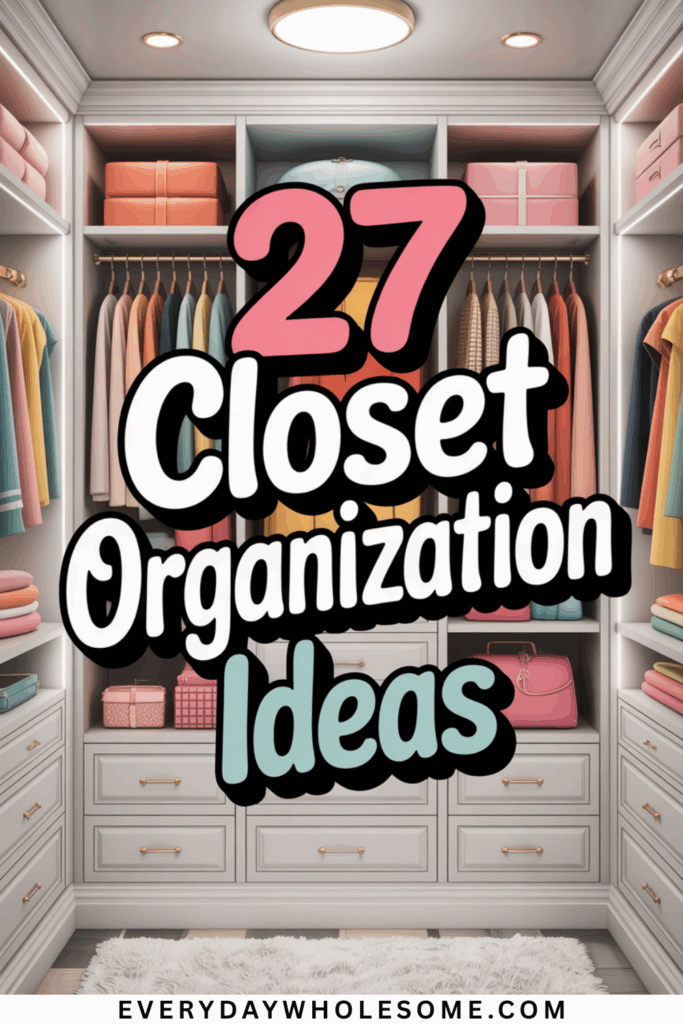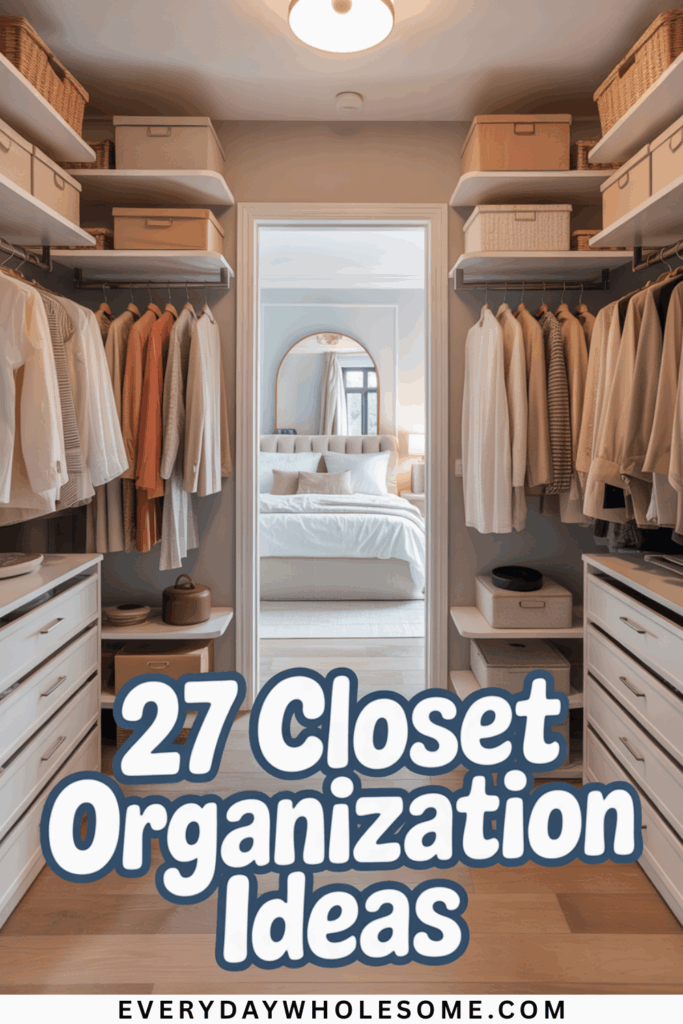
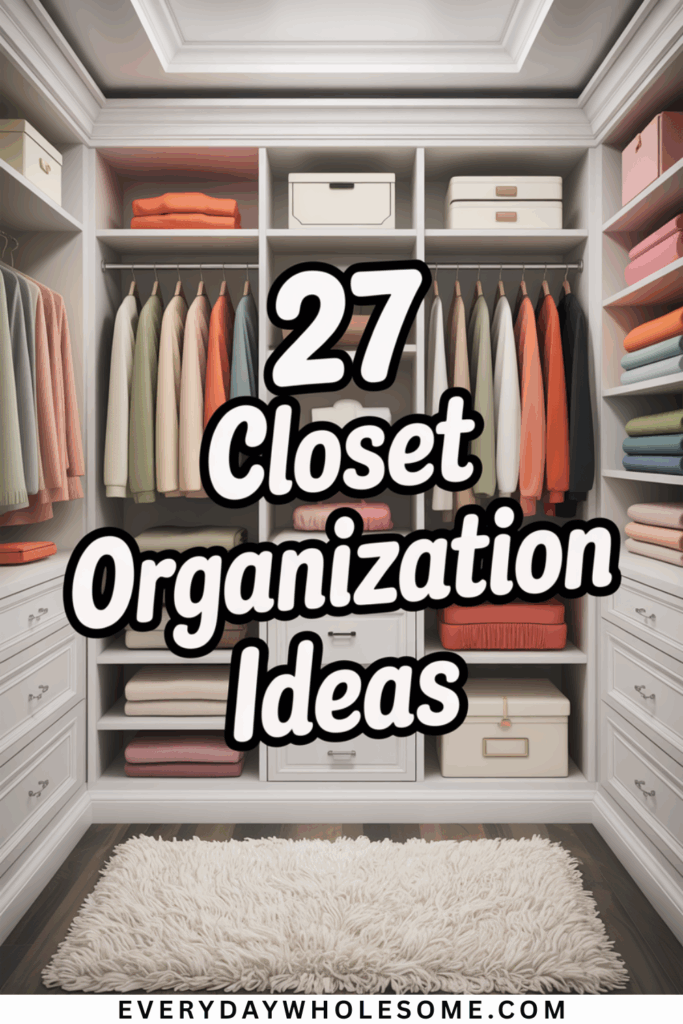
27 Closet Organization Ideas to Maximize Space and Efficiency
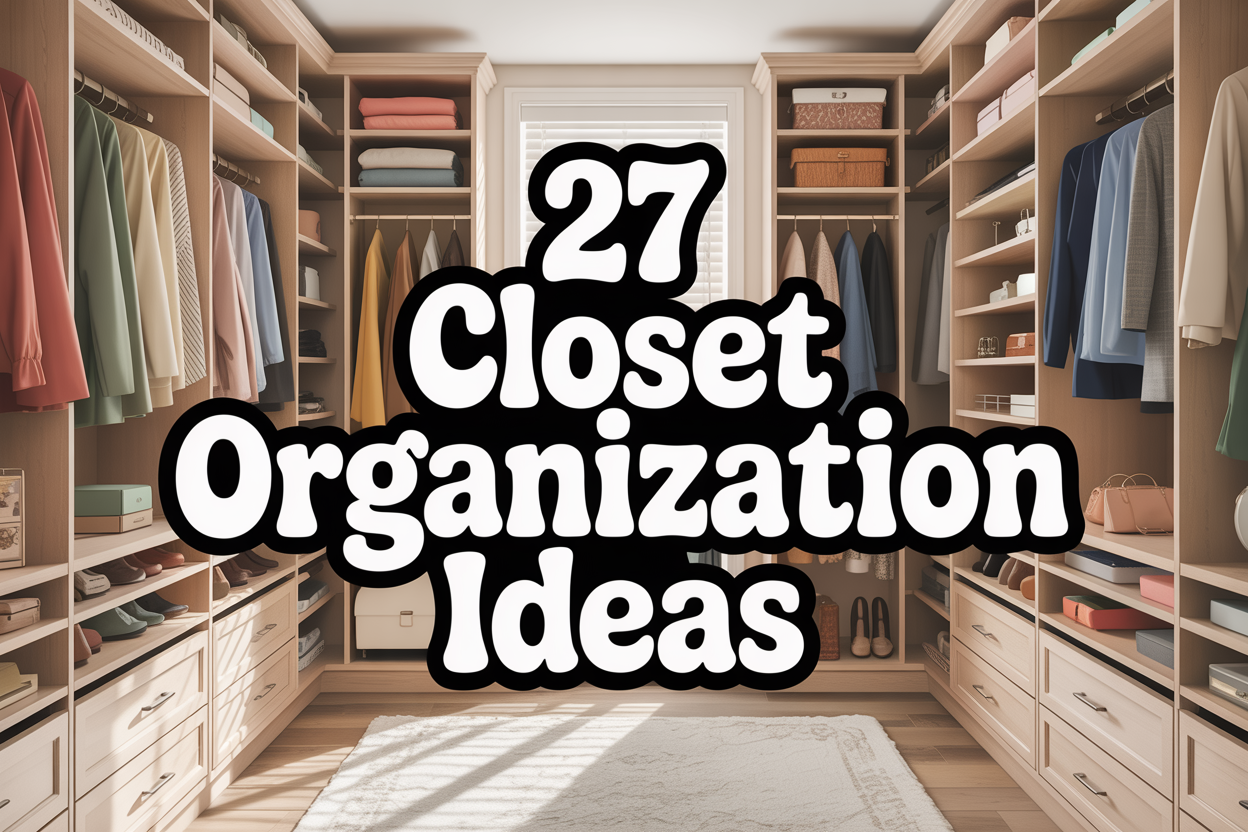
Closet organization can be a challenge for many people. Spaces can become cluttered, making it hard to find what is needed quickly. This article aims to help readers improve their closet’s functionality and appearance.
THIS POST MAY CONTAIN AFFILIATE LINKS.
PIN TO YOUR CLOSET ORGANIZATION BOARDS ON PINTEREST
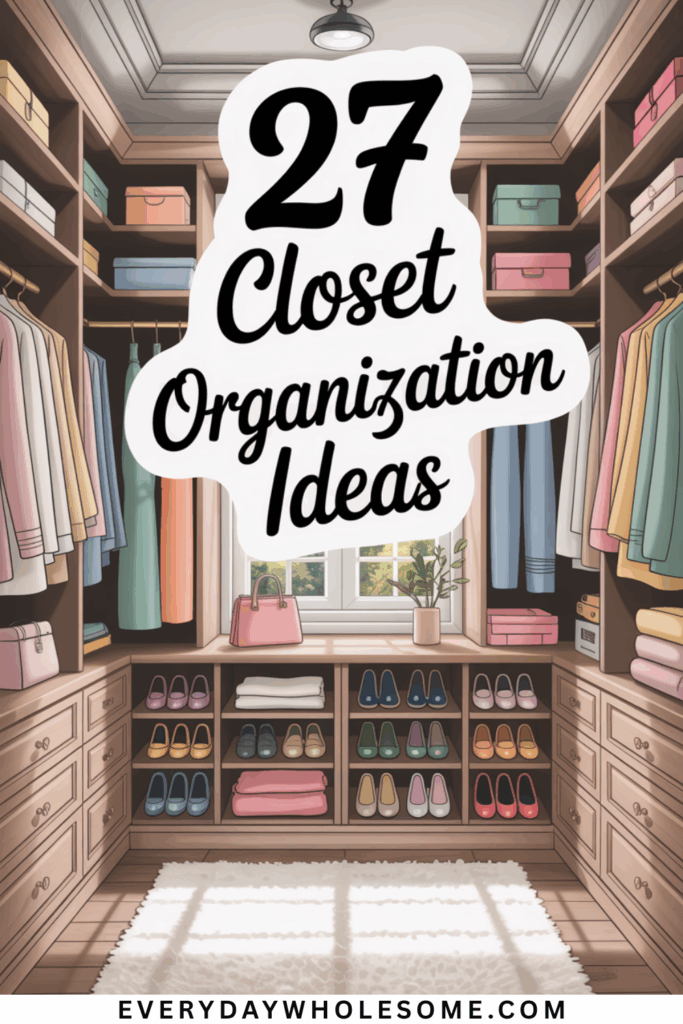

27 closet organization ideas offer practical ways to create more space, reduce mess, and keep items easy to access. These ideas apply to different closet sizes and styles, helping anyone make the most of their existing space.
1) Install adjustable shelving for flexibility

Adjustable shelving offers a practical way to organize a closet. It allows shelves to be moved up or down depending on the items stored. This flexibility helps make the most of the available space.
People can change the shelf height to fit tall boots or stack folded clothes neatly. It also works well for seasonal changes, such as switching between winter coats and summer garments.
Many adjustable systems do not require tools to move shelves, making it easier to modify the layout. Adding hanging rods or drawers is often possible without replacing the whole system.
This type of shelving adapts as storage needs evolve. It suits different closet sizes, from small reach-ins to large walk-ins. Adjustable shelves keep the space functional and well-organized over time.
2) Use clear plastic bins for visibility

Clear plastic bins make it easier to see what is inside without opening them. This helps save time when looking for items in a closet.
They work well for storing small items, seasonal clothes, and accessories that are easy to lose. Keeping these bins on shelves or in drawers keeps the closet neat and items easy to find.
Labeling clear bins adds another layer of organization. Even if something is stored at the back, it is simple to know what is inside at a glance.
Using clear bins encourages better habits because the contents are always visible. This makes it less likely for clutter to build up over time.
The transparency of the bins helps in rotating clothes or items by season. Items not in use can be stored without forgetting what is packed away.
3) Incorporate pull-out drawers for accessibility

Pull-out drawers make it easier to reach clothing and accessories without bending or stretching. They slide out smoothly, bringing items closer to the user. This design helps people with limited mobility access things without strain.
These drawers work well for shoes, folded clothes, and smaller accessories. They keep items organized and visible, reducing the time spent searching. Pull-out drawers can fit in small or large closets, offering flexible storage options.
For added convenience, pull-out drawers can be combined with pull-down rods. This allows vertical space to be used fully while keeping items within easy reach. Installing these features creates a closet that balances organization with accessibility for all users.
4) Add double hanging rods to maximize vertical space

Adding double hanging rods is a practical way to use the full height of a closet. By installing one rod above the other, a person can double the amount of hanging space without changing the closet’s footprint.
This method works well for shorter clothing items like shirts, jackets, and pants. It allows for better organization by separating types of clothing or seasons between the two rods.
Double rods fit in most closets without major renovations. Adjustable rods make it easier to change the height based on the type of clothes being stored. Using slim, space-saving hangers can improve this setup even more by reducing bulk.
Adding a second rod also frees up shelf space for bins, shoes, or folded clothes. It maximizes unused vertical areas that often get overlooked. This simple change can make a small or crowded closet feel much more efficient.
5) Use slim, non-slip hangers

Slim hangers take up less space than traditional bulky hangers. This allows more clothes to fit in the closet, making it easier to see and access items.
Non-slip hangers, often covered in velvet or a similar material, help keep clothes in place. This prevents garments from sliding off and ending up on the floor.
Using slim hangers also helps keep the closet looking neat and organized. Clothes hang evenly, avoiding crowded or messy rows.
Some people use smaller slim hangers designed for pants or shorter items. These can be hung on a lower rod, making use of all the vertical space.
Switching to slim, non-slip hangers is a simple and affordable change that improves closet function without needing a full renovation.
6) Label storage containers clearly

Labeling storage containers helps keep a closet organized and easy to use. When containers are clearly marked, it is simple to find items without opening every bin.
Labels should be easy to read and placed in a visible spot on each container. This saves time and reduces clutter by keeping everything in its proper place.
Using labels also helps others who share the space. Children and guests can quickly understand where items belong, which encourages them to put things away correctly.
Different types of labels work well, such as printed stickers or handwritten tags. Consistency in size and style makes the closet look neat and uniform.
Clear labeling is especially useful for small items or seasonal clothes. These often get lost or mixed up, but a label keeps them sorted and accessible.
Overall, labeling storage containers adds clarity and makes maintaining an organized closet simpler for everyone involved.
7) Use baskets for accessories and smaller items

Baskets are practical tools for organizing accessories and small items in a closet. They help keep things like scarves, belts, jewelry, and hats in one place, reducing clutter and making it easier to find what is needed.
Using baskets on shelves or inside drawers creates separate compartments. This prevents items from mixing together and saves time when searching for specific pieces.
Labeling each basket can add more order. It helps quickly identify what is inside, especially when baskets are stacked or stored on higher shelves.
Hooks or small baskets can also be used on the inside of closet doors. This maximizes space by holding items such as bags or ties without taking up shelf or drawer room.
Overall, baskets improve accessibility and maintain a tidy look. They are simple, affordable, and effective solutions for managing smaller closet items.
8) Install hooks on closet walls for bags and scarves

Installing hooks on closet walls adds extra storage space for bags and scarves. This helps keep these items visible and easy to grab. It also prevents scarves and bags from getting wrinkled or lost in piles.
Hooks come in many styles and sizes, so they can fit different closet designs. Choosing sturdy hooks is important to hold heavier bags without damage. Placing hooks at varying heights allows for better use of vertical space.
Adding hooks to unused sections of the closet wall can free up shelf and drawer space. It also keeps small accessories organized and reduces clutter. Hooks can be installed on drywall or wood with simple tools, making this a quick upgrade.
Using hooks for scarves prevents tangling, while hanging bags keeps their shape. This method makes the closet more functional and neat. It works well for closets of all sizes, especially where space is limited.
9) Use tiered shoe racks to save floor space

Tiered shoe racks help organize shoes efficiently by stacking multiple pairs vertically. This design uses less floor space than spreading shoes out on the ground.
They fit well inside closets, entryways, or small spaces where room is limited. Shoes stay visible and easy to reach without cluttering the floor.
Different designs offer various numbers of tiers. Choosing the right size depends on the number of shoes and the available space.
Tiered racks can hold all types of shoes, from sneakers to heels. This keeps footwear neat and protects it from damage.
Using a tiered shoe rack also helps free shelf space in closets. Removing shoes from shelves allows more room for other items.
Overall, tiered shoe racks provide a practical storage solution that balances space saving with easy access to shoes.
10) Incorporate built-in lighting for better visibility

Built-in lighting improves visibility in a closet by making it easier to see clothes and accessories. Proper lighting reduces the time spent searching for items and limits the risk of damaging delicate fabrics.
LED strip lights are a popular choice for built-in closet lighting. They can be placed along shelves or inside cabinets to provide even, soft illumination.
Motion sensor lights add convenience by turning on automatically when someone enters the closet. This feature is energy-efficient and helps keep the space well-lit without manual effort.
Recessed lighting integrated into the closet’s millwork creates a clean and polished look. It highlights specific areas, such as handbags or shoes, while maintaining a warm atmosphere.
Overall, built-in lighting not only increases function but also enhances the closet’s style. It makes the space feel modern and inviting, improving the daily dressing routine.
11) Add a full-length mirror on the closet door

Adding a full-length mirror to a closet door is a smart way to save space in a bedroom. It lets a person check their outfit without needing extra wall space or a separate mirror.
Mirrors on closet doors also help reflect light, making the room feel brighter and sometimes larger. This can improve the overall look and function of the space.
Installing a mirror on the door can be done with different methods, depending on the door type and mirror style. Some mirrors come with adhesive backing, while others need brackets or screws.
A frameless mirror with wood trim can give the door a clean and modern look. For folding or bi-fold closet doors, full mirrors covering the entire surface create a stylish and practical design.
This update is usually easy to do as a DIY project and does not require many tools. Adding a mirror this way provides both convenience and a subtle upgrade to closet organization.
12) Use shelf dividers to keep stacks neat

Shelf dividers help create separate sections on closet shelves. This keeps folded clothes like sweaters, jeans, and t-shirts from falling over.
By using dividers, each stack stays upright and easy to access. This prevents mess and saves time when looking for items.
Dividers can be clear or wire, fitting various shelf types. They make the closet look more organized and tidy.
They also help keep different clothing types apart. This makes it easier to find what someone needs without disturbing other stacks.
Shelf dividers are simple tools that improve closet function. They work well in small or large closets to maintain order.
People can combine dividers with other organizers for better use of space. They support keeping clothes visible and neat on shelves.
13) Create dedicated zones for different clothing types

Organizing a closet by creating specific zones for different clothing types helps make the space more functional. Grouping items like shirts, pants, dresses, and accessories separately allows for easier access and faster decision-making when choosing outfits.
They can use varied rod heights to better fit each clothing type. For example, a higher rod works well for dresses, while a lower rod suits shirts and pants. This keeps clothes hanging neatly without overcrowding.
Adding accessories zones is helpful too. Belts, ties, scarves, and watches can have their own space with racks or bins. This prevents small items from getting lost and keeps them easy to find.
This system reduces clutter and helps keep the closet tidy. It also makes daily routines smoother because each item has a set place based on how and when it is worn.
14) Utilize the back of the closet door for extra storage

The back of a closet door is often overlooked but offers useful space for storage. Adding hooks, racks, or fabric organizers here can help keep small items like scarves, belts, and jewelry neat and easy to find.
Over-the-door organizers with pockets are a simple way to store shoes, accessories, or even toiletries. Transparent pockets improve visibility, so users don’t have to dig through clutter.
Magnet strips or small shelves on the door can hold tools like tweezers or nail clippers. This keeps them within reach without taking up drawer space.
Using the back of the door frees up shelf and floor space inside the closet. It can help reduce crowded shelves and make the closet feel more organized overall.
15) Install a valet rod for planning outfits

A valet rod is a small, retractable rod installed inside a closet or cabinet. It provides a temporary spot to hang clothes while planning outfits or getting dressed. This simple addition helps keep clothes organized and easy to access.
It slides out when needed and tucks away neatly when not in use, saving space. People use it to hang freshly ironed clothes, accessories, or even bags.
Valet rods are also helpful for holding clothes while packing, sorting laundry, or preparing outfits for the next day. They can be installed in existing closets, laundry rooms, or even bathrooms.
Adding a valet rod is an efficient way to improve organization without taking up much room. It offers a convenient and practical solution for managing clothes daily.
16) Use hanging organizers for sweaters and bulkier items

Hanging organizers work well for sweaters and bulkier clothes that don’t fit neatly on regular shelves or hangers. They help keep items visible and easy to reach without taking up much horizontal space.
These organizers usually have compartments or shelves made from fabric, allowing sweaters to stay folded but off the floor or crowded shelves. This prevents wrinkles and keeps the fabric in better shape than stacking in a drawer.
Using hanging organizers can also free up shelf or drawer space for smaller items. It’s a simple way to separate heavier clothes from thinner garments like shirts or blouses.
They fit easily in most closets and can hold several sweaters or bulky winter clothes in one spot. This keeps the closet more orderly and makes it easier to find the right item quickly.
Overall, hanging organizers provide a practical solution to managing bulky clothes while maximizing vertical space in the closet.
17) Store out-of-season clothes in vacuum-sealed bags

Using vacuum-sealed bags is a simple way to save space when storing clothes not in use. These bags remove air, making items smaller and easier to fit in closets or boxes.
They work best with sturdy fabrics like sweaters, jeans, and coats. Delicate items or those prone to wrinkles should not be stored this way.
It is important to keep vacuum-sealed bags in a cool, dry area. Avoid places with high heat or moisture, which can damage the clothes inside.
Labeling the bags clearly helps to find specific items later without opening every one. This step keeps the process quick and organized.
Vacuum bags protect clothes from dust, pests, and odors. Still, folded clothes need to be clean and dry before sealing to prevent mold or mildew.
Overall, vacuum-sealed bags offer a practical solution for off-season clothes. They help keep wardrobes neat while making the most of limited storage space.
18) Use a rotating carousel for small accessories

A rotating carousel can help organize small accessories like scarves, belts, and jewelry. It spins to bring items to the front, making it easier to find what is needed quickly.
This option works well in small closets. It uses vertical space efficiently and keeps accessories visible rather than hidden in drawers or boxes.
Some carousels are motorized, allowing users to rotate the rack with a simple switch. This adds convenience, especially in tight spaces where reaching deep shelves can be difficult.
Using a carousel also helps keep accessories neat and prevents items from getting tangled or lost. It can make daily routines smoother by offering faster access to small pieces.
The system fits well in walk-in or reach-in closets with limited space. It’s a practical way to make the most of every inch without clutter.
19) Mount a tie and belt rack inside the closet

Mounting a tie and belt rack inside the closet helps keep these accessories organized and easy to find. These racks often come with multiple hooks or pegs, allowing for neat storage of ties, belts, and even small items like wallets or jewelry.
They can be attached to the closet wall, door, or a panel using screws. This saves drawer space and makes use of vertical areas that are usually wasted. Some racks have rotating hooks or slide-out features for better access.
Choosing the right rack depends on the closet layout and space available. A rack with around 20 to 27 hooks offers good capacity for a typical collection of belts and ties. Metal or wooden racks come in simple designs that fit most closet styles.
Installing one requires only basic tools such as a level and screws. Once mounted, it helps prevent clutter and speeds up getting dressed by keeping belts and ties visible and wrinkle-free.
20) Keep frequently used items at eye level

Keeping commonly worn clothes and accessories at eye level makes them easy to find and grab. This saves time when getting ready and keeps the closet orderly.
Less-used items can go on higher or lower shelves where they are still accessible but out of the way. Seasonal clothes or special-occasion items fit well in these spots.
This method also helps avoid clutter by reducing the need to dig through piles. It creates a clear visual layout, so everything important is visible.
Using uniform hangers and consistent spacing at eye level can improve both function and appearance. It makes the closet look neat while supporting daily use.
Overall, placing frequently used items in an easy-to-reach line simplifies the routine and promotes better closet habits.
21) Use stackable storage cubes for shoes

Stackable storage cubes are a practical solution for organizing shoes in closets. They allow shoes to be stored neatly while saving floor space. The cubes can be stacked vertically, which is ideal for small closets or tight areas.
These cubes often come with individual compartments. This helps keep shoes separated and easy to find. Clear or fabric cubes provide different options depending on the look and durability desired.
They are easy to assemble, usually needing just basic tools like a screwdriver. Many people like them because they can be customized by adding or removing cubes based on storage needs.
Stackable cubes can also be moved or rearranged quickly. This flexibility makes them useful for adjusting storage as shoe collections grow or shrink.
Using these cubes helps maintain a clean and organized closet. Shoes stay visible and accessible, reducing clutter and saving time when choosing footwear.
22) Incorporate a pull-out laundry hamper

A pull-out laundry hamper fits neatly inside a cabinet or closet space. It keeps dirty clothes hidden and helps maintain a tidy room. This design saves floor space, which is useful in smaller areas.
The hamper slides in and out so it is easy to use. It makes sorting laundry more efficient by providing a dedicated spot for clothes. This reduces clutter and keeps the room looking organized.
Many pull-out hampers come with removable liners. This feature makes it simple to carry laundry to the washer. Installing one can be part of a cabinet organizing system for better overall storage.
Adding a pull-out laundry hamper helps streamline daily routines. It combines functionality with a clean look. This option is practical for anyone looking to improve closet or laundry room organization.
23) Add a small countertop for folding clothes

Adding a small countertop in a closet provides a dedicated space for folding clothes. It helps keep the area neat and makes laundry tasks easier. The countertop can be simple and compact to fit even in small closets.
It can be mounted on the wall or placed over existing shelving. When not in use, some countertops can fold down to save space. This feature is helpful in closets with limited room.
Using a countertop also separates folded clothes from hanging items. This makes the closet more organized and functional. It can be made from wood, laminate, or other durable materials to hold the weight of folded laundry.
A well-placed countertop saves time by giving a flat surface to sort and fold clothes right where they are stored. This reduces the need to move items around the house. It’s a practical addition to any closet aiming for better organization.
24) Use decorative boxes to keep clutter hidden

Decorative boxes are a practical way to store small or loose items in a closet. They help keep things tidy by hiding clutter out of sight. This makes the closet look neater without sacrificing style.
These boxes come in various shapes, sizes, and designs. Choosing ones that match the closet’s decor can add a polished look. They can hold items like scarves, belts, or even shoes.
Using decorative boxes also makes it easier to find things quickly. Instead of searching through piles, organizing belongings in boxes saves time. It keeps the space orderly without needing frequent cleaning.
They can be stacked or arranged on shelves. This maximizes vertical space and keeps the closet organized. Decorative boxes provide a simple and effective storage solution for a clutter-free closet.
25) Create a kids’ closet section with colorful bins

Using colorful bins in a kids’ closet helps keep clothes and toys organized. Each bin can hold a different type of item, making it easier for children to find what they need.
Color coding the bins by category, like red for shirts and blue for pants, creates a simple system. Kids can quickly learn where to put things away, which encourages them to tidy up on their own.
Clear or sturdy bins with labels are best. Labels can use words or pictures to help younger children who cannot read yet. This method reduces clutter and makes the closet look neat.
Bins that are easy to open give kids independence. When everything has a place, mornings become less stressful because kids can get ready faster without searching for items.
This setup can work in small or large closets. It maximizes space by keeping things off the floor and shelves orderly. Parents find this approach practical and simple to maintain.
26) Use LED strip lights along shelves

LED strip lights are a simple way to brighten closet shelves. They provide clear light that makes it easier to see items stored in dark or deep spaces.
These lights are thin and flexible. They come with adhesive backing, so they can be attached quickly without tools or drilling. Users can cut the strips to fit the exact length of their shelves.
LED strips use little energy and produce very little heat. This makes them safe for closets where space is often tight.
When installed along the edges of shelves, the lights highlight clothes and accessories, helping users find things faster. LED strips can also add a clean, modern look to the closet.
Some LED strips come with dimmer controls or motion sensors. These features add convenience by adjusting brightness or turning on the lights only when someone opens the closet.
Overall, LED strip lights are a practical, low-maintenance choice for improving closet lighting and organization.
27) Install a sliding door to save space

Sliding doors are a practical choice for closets, especially in small rooms. Unlike traditional hinged doors that need extra space to open, sliding doors move sideways along a track. This design saves valuable floor space and makes the closet area easier to access.
They also help keep the room looking neat and modern. Sliding doors fit well in tight spots where a full door swing would be difficult or impossible. They can improve the flow of the room without adding clutter.
Installing sliding doors is a project many can handle with basic tools. Adjustable shelves inside the closet can be added to customize storage and make the most of the space behind the doors. This combination creates a well-organized and efficient closet.
Overall, sliding doors are a smart way to improve closet functionality and make a small area feel larger.
Closet Organization Principles
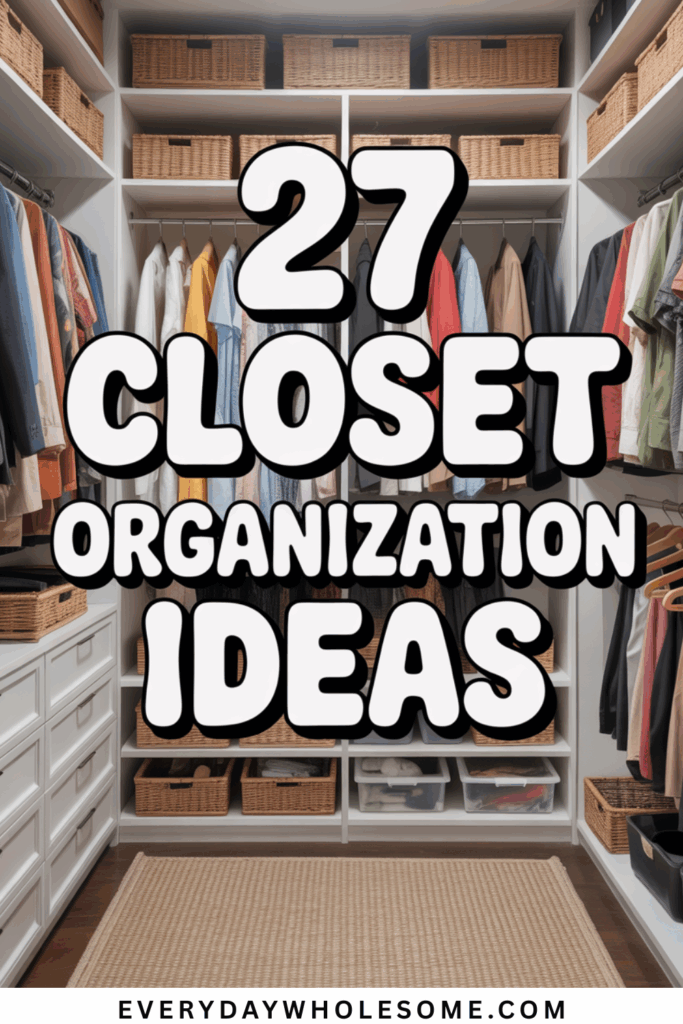
Effective closet organization relies on smart use of space and removing items that aren’t needed. These two ideas help create a neat, easy-to-use closet where everything has a place.
Space Efficiency Basics
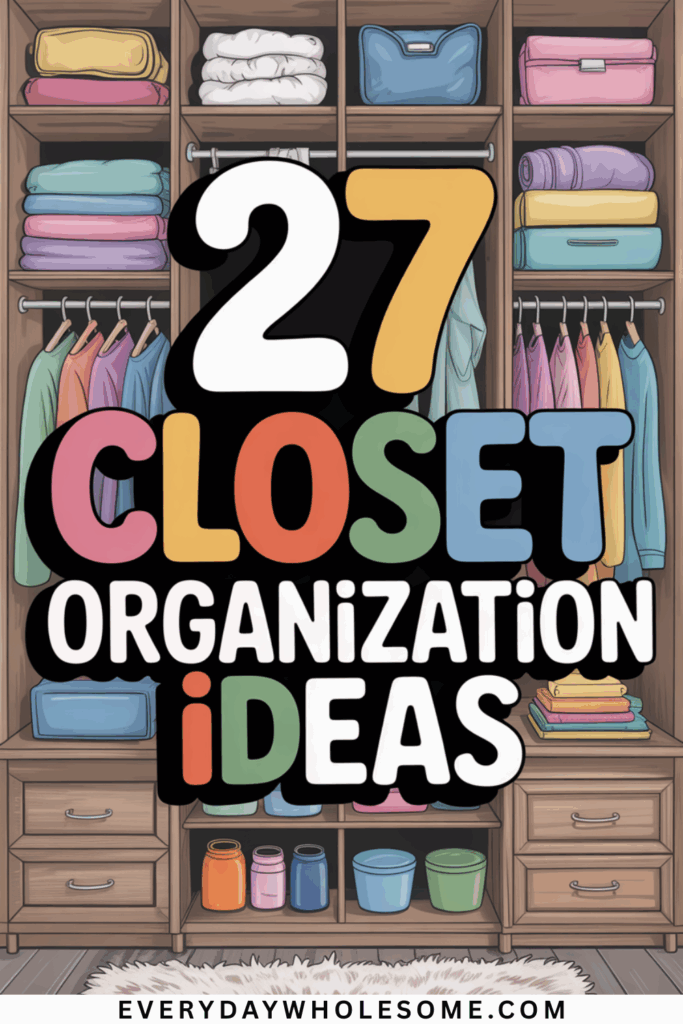
Using space well means fitting more in without creating clutter. Vertical space is important—adding extra shelves or rods can double hanging areas. Slim, uniform hangers save room and look tidier.
Storage bins and clear containers keep small items together and visible. Using hooks or racks on the inside of doors adds storage without taking up shelf space. Grouping similar items—like pants, shirts, or accessories—makes it easier to find things.
Stackable organizers and tiered shelves use cubic space effectively. Adjusting shelf heights can fit both tall boots and folded sweaters in the same area. The goal is to keep everything accessible and clearly visible.
Decluttering Strategies
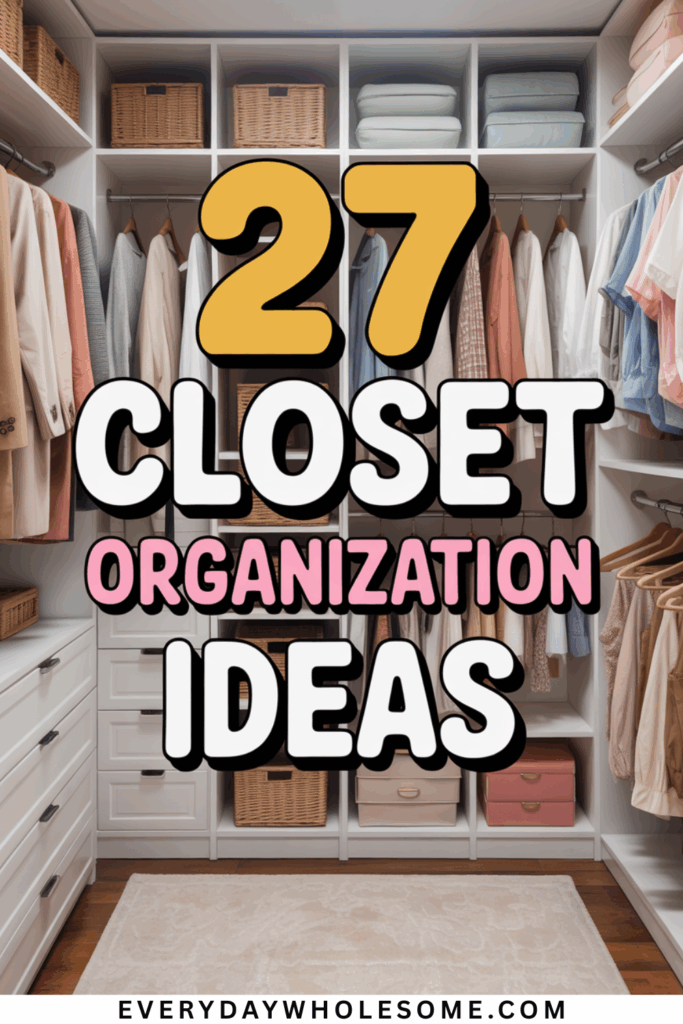
Removing unused or unwanted clothes is key to staying organized. Sorting items into keep, donate, and toss piles helps clarify what belongs in the closet. Seasonal rotation cuts down on overcrowding by storing off-season clothes elsewhere.
Items that don’t fit or haven’t been worn in a year can be good candidates for donation or recycling. Keeping only versatile, frequently worn pieces frees space for everyday needs.
Regularly revisiting the closet prevents buildup of clutter. Using clear labeling on bins or shelves helps maintain order and discourages holding on to unnecessary things. Decluttering is an ongoing step, not a one-time event.
Maintaining Organized Closets
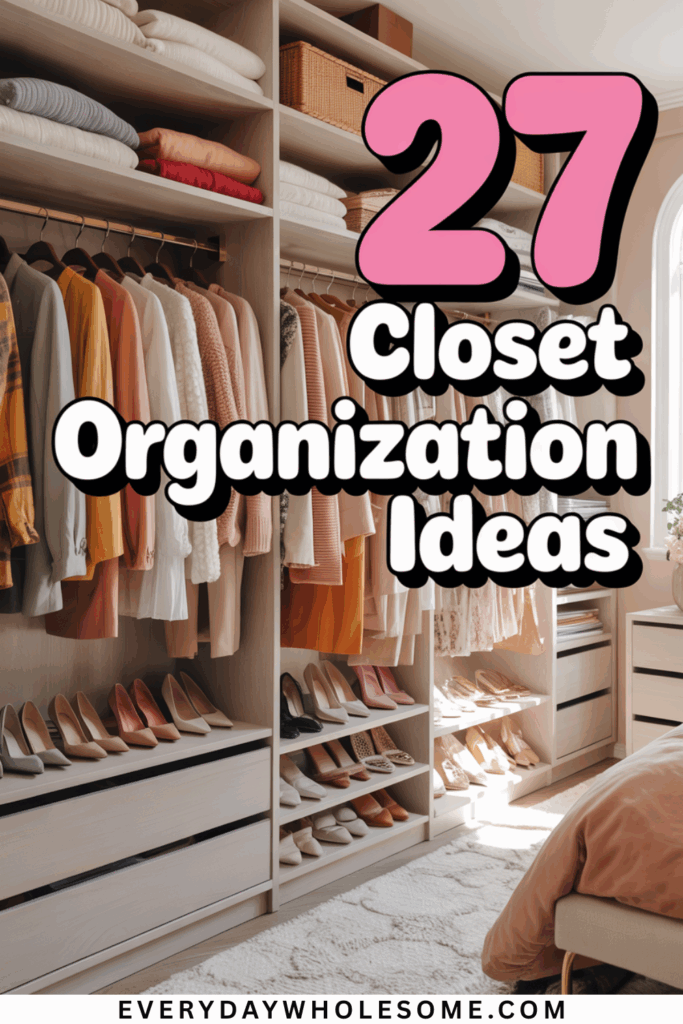
Keeping closets tidy requires regular effort and planning. Simple habits and smart seasonal routines help preserve order and prevent clutter from building up over time.
Establishing Cleaning Routines
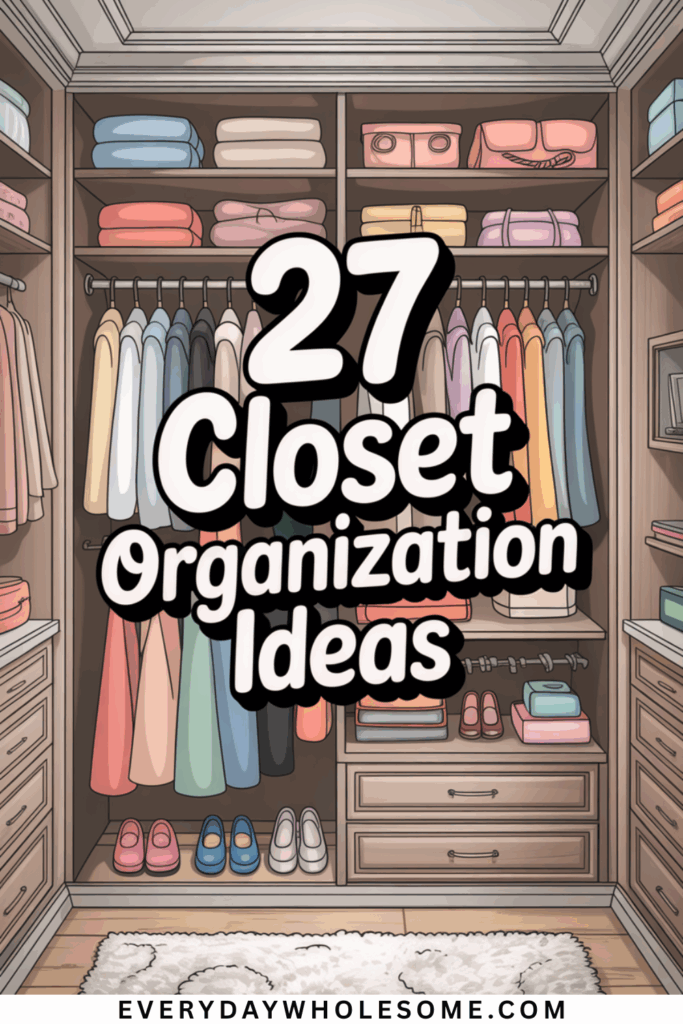
Creating a consistent cleaning schedule is vital to maintain an organized closet. This can be weekly, biweekly, or monthly, depending on how often the closet is used.
During each cleaning session, items should be checked for wear, fit, and relevance. Removing clothes that are damaged or no longer worn helps avoid clutter.
A quick dusting and wiping of shelves or rods prevent dust build-up. It also keeps everything fresh and visually appealing.
Labels on bins or shelves can be reviewed and updated for accuracy. This small step helps grab the right items quickly and supports a neat layout.
Tips for Seasonal Switching
Switching out clothes each season is key to managing limited closet space. Storing off-season items separately keeps daily wear easy to find.
Before packing away summer or winter clothes, each item should be cleaned and inspected. Storing dirty or damaged clothes can cause odors or worsen problems.
Vacuum-sealed bags or clear storage bins save space and protect clothes from dust and moisture. Labeling these containers clearly speeds up finding items when the season changes.
Only bring out the clothes for the current season. This rules out overcrowding and makes the closet easier to navigate.
Using a checklist for seasonal swapping can help ensure nothing is forgotten or misplaced during the process.